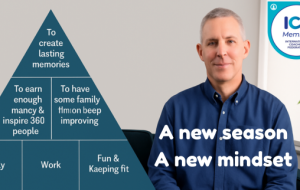


Develop a Growth Mindset to Influence Your Success


Asking questions is an essential part of growth.
There is scientific evidence to back up this fact. It was discovered by Carol Dweck, Professor of Psychology and expert in the field of motivation, 30 years ago when studying children’s responses to being set challenges. Some loved the tests and asked more questions to help them understand more; those children were recognised as having a ‘growth mindset’. Children with more ‘fixed mindsets’ didn’t do so well and were upset at failing, until they were told ‘not yet’ instead of ‘failed’. That distinction helped them to recognise that they had work and growth to do to succeed.
What Dweck discovered is that when people – children and adults – think they know everything already, that fixed mindset prevents them from looking at ways to grow. Whereas a growth mindset always wants to learn more.
How was your growth mindset in 2022?
What were you successful at last year that you’d like to do more of this year? Whether as part of your career or in life in general, remembering how you felt when you successfully completed a project, created a new system, or learnt something new may help you to recognise where your next goals could be leading you.
By utilising the GROW model, you can both self-coach and coach your team to enhance your career progression.
What would you like to achieve this year that you haven’t already?
Effective goal setting is a three-step process that ideally links to your purpose. Consider what your specific goals and achievements are, and how they fit in with your wider career goals.
Your goal statement would look something like this:
- By [goal completion date]
- I will have achieved [specific goal]
- So that I [have a new product/salary rise/promotion/whatever] and feel [proud, less stressed, etc.]
Most people have a better chance of achieving their goals if they stir an emotion within them, such as pride, a sense of achievement, or happiness. If you’re helping someone else with their goals, check that they’re genuinely provoking an emotional response.
Coaching your team to set achievable goals
As a leader, coaching your team to improve their growth mindset and to set achievable goals helps them to succeed. And when your team is successful, it positively impacts you and the organisation as a whole.
Coaching your team means asking the right questions. So, let’s go through some of the GROW model questions you can use both on yourself and your team:
Goals
- What work did you enjoy last year, and what did you dislike?
- What is important to you now?
- What aspects of your performance would you like to improve?
- Where would you like to be in two, five or ten years from now?
- Is your goal inspiring, motivating and challenging enough?
- When do you want to achieve it by?
- Do you need to break it down into bite-sized chunks to make it easier to achieve?
- How will you know when you’ve achieved it?
Reality
- What’s your current situation?
- What motivates you to achieve?
- What have you accomplished in the past that you’ve learned from?
- Are there any obstacles that are hindering your progress?
- What resources do you need to help, e.g. equipment, training or financial?
Options
- What could you do? What are your options?
- If money and time were no object, what are your viable options?
- What are the pros and cons of each option?
- What obstacles are preventing you from proceeding?
- Is there anything you need to stop doing to achieve your goal?
Will, Way and When
- This is your ‘Actions’ list – the Will to do it, the Way you do it, and When it needs to be done.
- Which option is the fastest or easiest to get started on?
- What might stop you? Write down ways to keep yourself motivated.
- When will you take action?
- Write down no more than five or six actions to prevent overwhelm and to help you achieve your goal.
- How long will it take?
- Who will you ask to help you?
When you’re coaching your team members, take care to not show an opinion on what they’re sharing with you. The true essence of coaching is to believe that they have the answers within themselves. Your goal is to ask questions, not tell them what to do – that’s the key difference between coaching and mentoring.
Coaching yourself can be difficult because you’re either too hard on yourself or too lenient. If you set too tough a challenge, it can become demotivating. That’s when you need someone to coach you. Especially if you find yourself giving up on your goals easily. Asking for help is a strength, not a weakness.